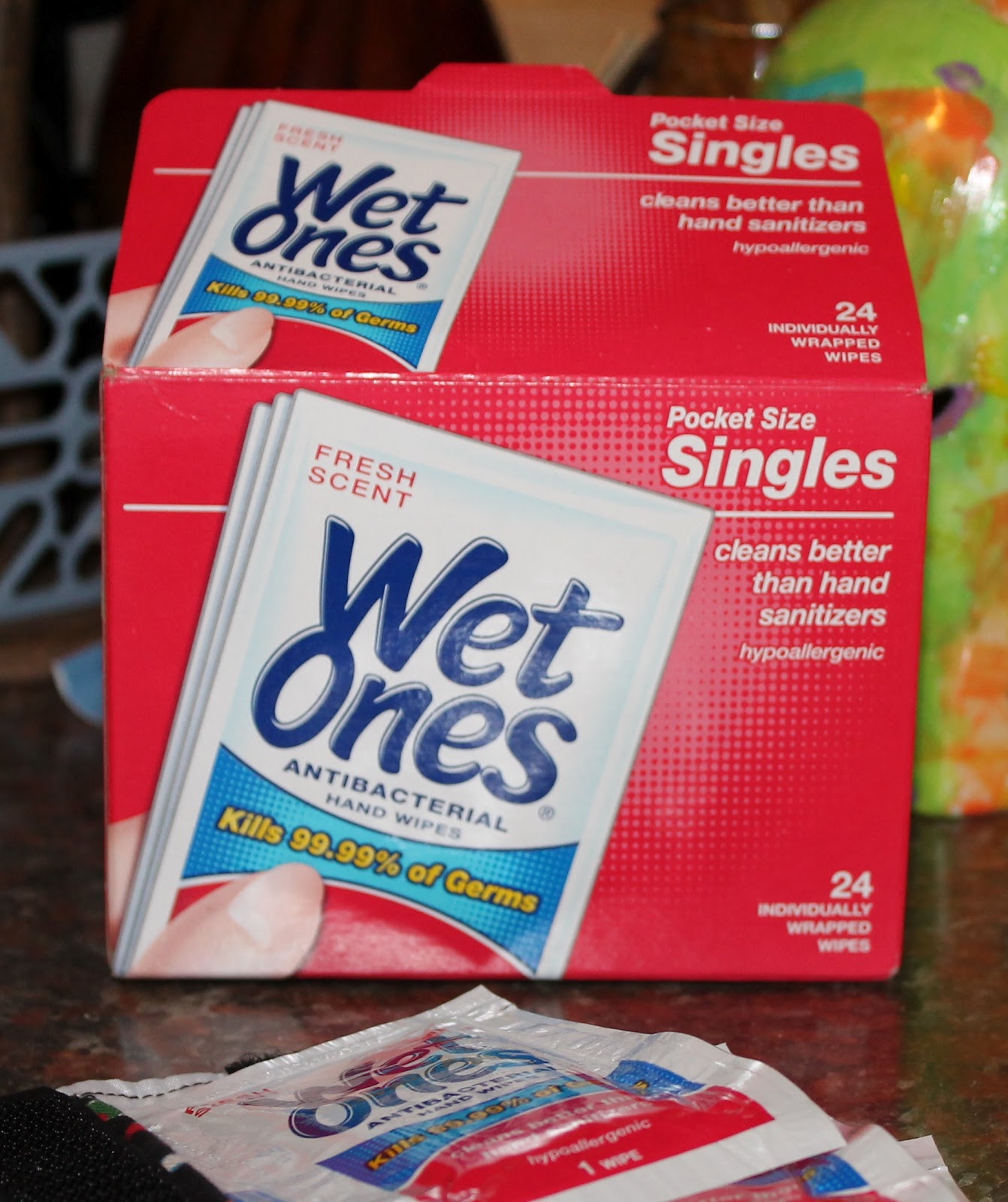
Just recently we made that yearly trip to buy school supplies. The schools around here always send out a list of items to buy before school starts, including pencils, crayons, scissors, papers, etc. Of course, we end up leaving the store with all of those things and much, much more. There are always some new items each year that the kids just have to get, but there are also some things that I make them get, too, including Wet Ones Antibacterial Hand Wipes.
Liam using Wet Ones after playing w/ our pets!
Once school starts back it doesn't take long for the germs to start spreading once again. Just thinking about those sneezing kids and snotty noses gives me the chills. Eck! Last year, Josiah got sick last year within 2 weeks of starting school. It really is amazing how quickly children can spread sickness around. That's why I do my part to keep my kids healthy and germ-free. We take our daily vitamins, we get a good amount of sleep, we wash our hands often and use Wet Ones to wipe our hands. I even use them to wipe off toys while on the go.
My mom used Wet Ones when I was a child and, when I was recently watching an old show from the 80s, I noticed a container of Wet Ones on the counter. It's a trusted product and one that I've also purchased for years. Plus, the Wet Ones Antibacterial Hand Wipes Kill 99.9% of germs and are hypoallergenic, which is great for my son who has allergies.
The box says they even clean better than a hand sanitizer, which just makes me feel safe and like I've made the right decision for my children's health. This time last year I actually bought the Wet Ones in a container that fits in a car cup holder and it was awesome because we could keep it right where we needed it and it didn't get lost under the seat. It also fit on the cup holder of our stroller, so we could take it to the park and out walking just in case. With the Wet Ones Singles we received recently for this review, they are so small that I can easily take them along in my purse or diaper bag. To encourage the kids to keep clean, especially before eating, I put Wet Ones in their lunchbox. I've also started packing them in a reusable snack bag and stuffing them in the side-pockets on their book bags just in case the need arises. Then I check every week or so to see if they need more.
How do you keep your kids healthy and germ-free during the school year? Do you use Wet Ones?
I wrote this review while participating in a blog tour by Mom Central Consulting on behalf of WetOnes. I received a product sample to facilitate my review and a promotional item to thank me for taking the time to participate.
I remember bring my first son, Josiah, home from the hospital. It was such an exciting time in our lives, though we seriously had no idea what to expect. We were sent home with copious amounts of antibacterial hand gel and told to make everyone wash hands before touching the baby. I knew to keep baby away from germs and that he was more susceptible to sickness in the first few weeks of life , but beyond that I was completely clueless about how serious it is. I honestly was not at all educated about respiratory syncytial virus(RSV).
The day Liam was born. He was so tiny and needed help breathing.
Two years later little Liam arrived in this world 5 weeks early. His lungs were unfortunately underdeveloped, so he was intubated and kept in the hospital for about two weeks until he was strong enough to breath on his own. During this time, both my husband and I were required to take several parenting classes before bringing him home. This is when we first really learned about RSV and how dangerous it can be for babies and especially preemies. It is such a common and dangerous virus that spreads easily and can live pretty much everywhere and spreads through contact. Because of this, almost 100% of children contract RSV by their second birthday! One of the preemies already had RSV, too, which made it even more important for us to take all the precautions. In older children the symptoms of RSV are similar to a cold or flu, so not as dangerous, but for young babies, preemies and those with certain lung and heart diseases it can lead to extremely serious respiratory infections.
For this reason, we were given advice on several different occasions, including during the parenting classes about taking precautions against germs and RSV for our preemie. There are many easy ways to keep those germs to a minimum during those first weeks and it is of utmost importance to heed this advice for the sake of your own baby. Seeing a baby in the hospital with RSV was heartbreaking because you could see and hear just how sick they were. Believe me, you do NOT want this for your own baby, so without further ado, here are some suggestions for proper baby etiquette when bringing baby home from the hospital!
Our little man at home and growing strong!
A few tips to remember when a loved one has a new baby:
Call before you visit. New parents need time to set up a routine and bond. By giving them time to do so before you visit, you are respecting the new family.
Postpone a visit if you feel that you may be getting sick, have recently been ill or exposed to illness.
Remember that parents know best. If you feel they are being overprotective or overly cautious, just consider that only they know what’s best for the health of their new son or daughter.
Offer to do something to ease their responsibilities as they spend time as a family, such as laundry, cooking or dishes. Sleep-deprived moms and dads will appreciate your help!
If you do schedule a visit with a new baby:
Wash your hands frequently—upon entering the home and especially prior to holding the baby. Parents, and the new baby, will appreciate it.
Leave toddlers at home, especially during the winter months. Young children, especially if they attend day care or preschool, often carry germs and viruses, like RSV, that are easily spread.
A few facts about RSV that all parents, caregivers and loved ones should know:
Almost every baby will contract RSV by age 2, but only 1/3 of moms say they’ve heard of the virus.
Serious RSV infection is the leading cause of infant hospitalization, responsible for more than 125,000 hospitalizations and up to 500 infant deaths each year.
RSV occurs in epidemics each fall through spring. The CDC has defined “RSV season” as beginning in November and lasting through March for most parts of North America.
There is no treatment for RSV, so it’s important for parents to take preventive steps to help protect their child (e.g., wash hands, toys, bedding frequently; avoid crowds and cigarette smoke).
Certain babies are at an increased risk of developing serious RSV infection, so it’s important to speak with a pediatrician to determine if a baby may be at high risk for RSV, and discuss preventive measures.
Symptoms of serious RSV infection include: persistent coughing or wheezing; rapid, difficult, or gasping breaths; blue color on the lips, mouth, or under the fingernails; high fever; extreme fatigue; and difficulty feeding. Parents should contact a medical professional immediately upon signs of these symptoms.
I wrote this review while participating in a blog tour by Mom Central Consulting on behalf of MedImmune and received promotional item to thank me for taking the time to participate.